


Ethnic Co Ord Sets for Women – Style Guide & Outfit Tips
Ethnic Co Ord Sets for Women: Ultimate Style Guide (Cotton, Festive & Occasion-Ready Looks)
There's something happening in Indian fashion right now that I find genuinely exciting. After 22 years of watching trends come and go, I can tell you that the rise of ethnic co ord sets for women isn't just another passing fad—it's a response to what modern Indian women have been asking for all along: style without the stress.
I'm Khushnuma Qazi, co-founder of Cotton Culture, and I've spent over two decades building our brand from a small manufacturing unit to 52 stores across India. In that time, I've seen countless fashion movements, but few have resonated as strongly as coordinated ethnic wear. Walk into any of our stores today—whether it's in Pune, Delhi, or Kolkata—and you'll find women gravitating toward these ready-to-wear sets with relief in their eyes.
Why? Because we're all done with the "what goes with what" morning panic. We want to look put-together, honor our cultural roots, and still catch the 9 AM meeting without breaking a sweat.
In this guide, I'm sharing everything I've learned about styling, choosing, and wearing ethnic co-ord sets—from the breathable cotton versions perfect for Indian summers to the embroidered festive pieces that work for Diwali gatherings. Whether you're new to this trend or looking to expand your collection, let's walk through this together.
What Are Ethnic Co Ord Sets for Women?
Ethnic co ord sets for women are pre-matched two-piece or three-piece outfits that combine traditional Indian design elements with modern silhouettes. Typically consisting of a kurta or top paired with coordinating bottoms (palazzo, pants, or skirt) and sometimes a dupatta, these sets eliminate styling guesswork while maintaining cultural authenticity.
Here's what makes them different from buying separates: the fabric, print, and design are already harmonized. You're not standing in front of your wardrobe at 7 AM trying to figure out if your orange kurta clashes with your green palazzo. The work is done.
I'll be honest—when we first introduced women's ethnic co-ord outfits at Cotton Culture back in 2018, I wasn't sure how customers would respond. Our stores had always sold individual pieces. But within three months, co-ord sets became our fastest-moving category. Women told us they loved having one less decision to make in their already packed mornings.
The trend speaks to a larger shift I've noticed: Indian women want fashion that respects their time. They're professionals, mothers, entrepreneurs—they need coordinated ethnic wear that looks intentional but doesn't require a stylist's eye.
Types of Ethnic Co-ord Sets Explained
Cotton Ethnic Co Ord Sets for Women
Let me talk about cotton first, because it's close to my heart—and it's literally in our brand name for a reason.
India has six months of heat. Mumbai humidity, Delhi summers, Chennai's coastal warmth—cotton isn't just a preference here, it's survival. Over the years, I've watched synthetic fabrics fail the real-world test. A woman might buy a beautiful polyester co-ord set, wear it once in April, and never reach for it again because she remembers how uncomfortable she felt.
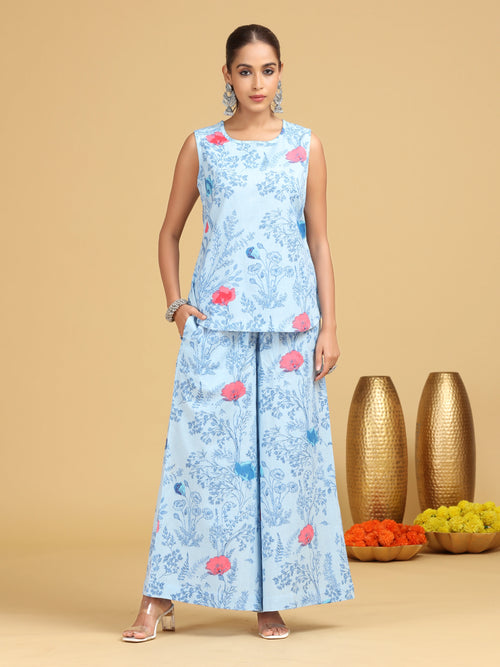
Cotton kurta sets solve this. The fabric breathes. It absorbs moisture. It softens with every wash instead of degrading. At our manufacturing unit, we work primarily with:
· Handloom cotton from Rajasthan and Gujarat
· Slub cotton that has a natural texture
· Organic cotton for customers who prioritize sustainability
Our best-selling cotton co-ord this past season? A mint green hand-block printed set with straight-cut pants. It sold out three times.
Why? Because women could wear it to work, to a casual lunch, or even to a low-key festive gathering. The fabric made it versatile.
If you're building an ethnic wardrobe in India, breathable Indian co-ords in cotton should be your foundation. Everything else is accent pieces.
Festive & Occasion-Ready Sets
Now, cotton won't always cut it. There are moments—weddings, Diwali celebrations, engagement ceremonies—when you need something with more presence.
This is where we bring in mirror work, gota patti, and embroidery. Our festive collections typically feature:
· Chanderi cotton-silk blends with zari borders
· Georgette co-ords with sequin detailing
· Tussar silk sets with block printing
A customer in Bangalore recently told me she wore one of our embroidered co-ord sets to her cousin's wedding and received more compliments than women in heavy lehengas. Her secret? The outfit looked expensive and elaborate, but she could actually sit, eat, and dance in it. That's the advantage of a well-designed festive co-ord style—it has impact without the burden.
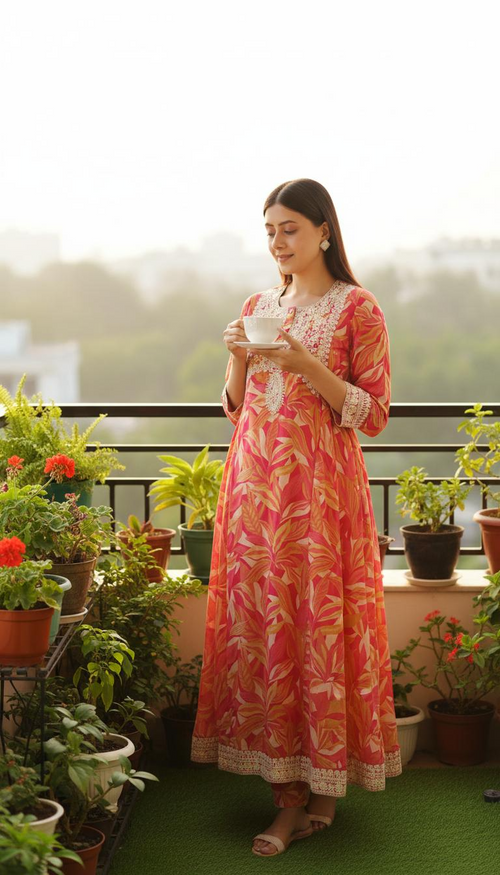
One thing I always tell our customers: festive doesn't mean uncomfortable. If you can't raise your arms or sit comfortably, it's not worth wearing.
Casual vs Office Ethnic Co-ord Sets
I've learned that most women need two distinct categories of ethnic wear: everyday casual and office-appropriate.
For casual co-ords, think:
· Relaxed fit
· Softer colors (pastels, neutrals)
· Minimal embellishment
· Easy-care fabrics
For office ethnic sets, the requirements shift:
· Structured tailoring
· Professional colors (navy, maroon, bottle green)
· Subtle prints
· Wrinkle-resistant fabrics
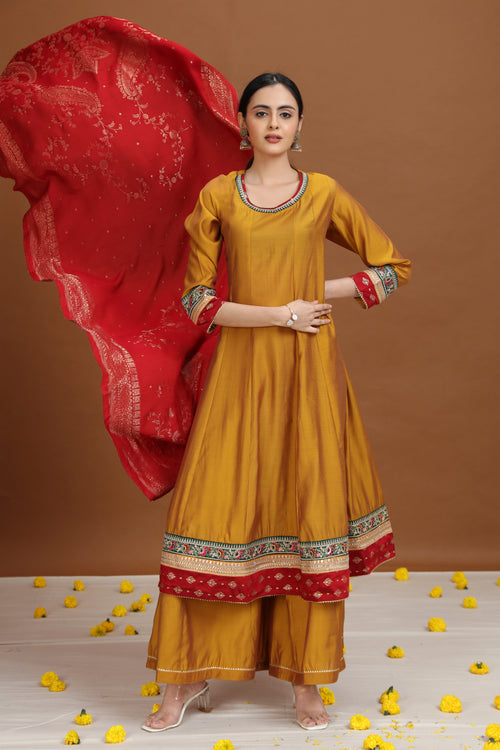
We've had corporate customers specifically request co-ord sets that look polished enough for client meetings but don't require dry cleaning after every wear. That's led us to develop collections in cotton-linen blends—they hold their shape but wash easily at home.
Fusion & Indo-Western Co-ord Sets
This category fascinates me because it's where tradition meets experimentation.
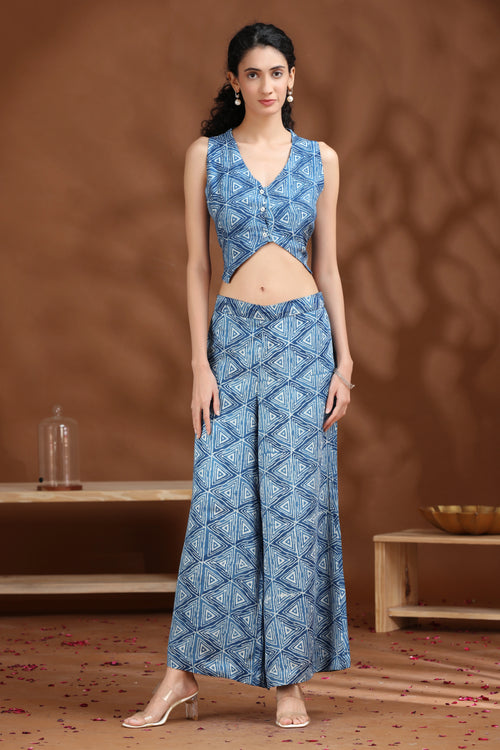
Indo-western coordinate sets might feature:
· A printed kurta top with culottes instead of traditional palazzos
· An asymmetric hemline paired with straight pants
· Western cuts (like a peplum) in traditional prints (like Ajrakh)
Our younger customers—college students and women in their twenties—gravitate toward these kurta pant co-ords. They appreciate having cultural elements without feeling like they're wearing their mother's wardrobe.
.
I remember a customer in Jaipur who mixed our indo-western co-ord top with jeans. She came back a week later and said, "This is how I wear Indian clothes now. I don't have to choose anymore."
That's the power of fusion: it expands your options instead of limiting them.
How to Choose the Perfect Ethnic Co-ord Set
Here's what I've learned from dressing thousands of women: the "perfect" co-ord set isn't about following trends—it's about understanding your life and your body.
Fit: Relaxed vs. Tailored
Relaxed fit co-ords work beautifully for:
· Hot weather (more air circulation)
· Casual settings
· Layering with jackets or dupattas
· Body types that prefer comfort over contouring
Tailored co-ords are better for:
· Professional environments
· Evening events
· Creating a more polished silhouette
· Showcasing structured designs
In our stores, I always ask customers: "What's your primary use case?" A teacher needs different fits than someone working from home. There's no universal answer.
Body Type Considerations
I'm going to be direct here because I wish someone had told me this earlier in my career: ethnic co ord sets for women can be incredibly flattering across all body types—but only if you know what to look for.
Apple body type (broader shoulders, narrower hips):
· Choose co-ords with A-line kurtas
· Opt for darker tops with lighter bottoms
· V-neck or square-neck tops create length
· Avoid gathered or cinched waists
Pear body type (narrower shoulders, wider hips):
· Look for embellished or detailed tops
· Choose straight-cut or palazzo bottoms
· Avoid tight ankle-length pants
· Boat necks and off-shoulder styles add balance
Hourglass body type (balanced proportions):
· You can experiment freely
· Both fitted and relaxed styles work
· Belted co-ords accentuate your waist
· Don't hide your shape in overly loose fits
Rectangle body type (similar measurements throughout):
· Create curves with peplum tops or gathered bottoms
· Layered looks add dimension
· Try belted or tie-up styles
· Experiment with asymmetric hemlines
Seasonality and Fabric Choice
This might seem obvious, but I see this mistake constantly: women buying gorgeous georgette co-ords in March and then wondering why they can't wear them until November.
Summer (March-June):
· Cotton and cotton-linen blends only
· Light colors reflect heat
· Loose, breathable fits
· Avoid synthetic linings
Monsoon (July-September):
· Quick-dry fabrics
· Darker colors (hide stains)
· Ankle-length bottoms (no dragging hems)
· Machine-washable materials
Winter (October-February):
· Cotton-silk blends
· Layering-friendly designs
· Jewel tones and deeper colors
· Room for jackets or shawls underneath
At Cotton Culture, we've structured our collections around these seasons. It's not just marketing—it's practicality born from understanding India's climate.
Styling Tips & Outfit Ideas
Let me share what actually works in real life, not just on Instagram:
Day Look: Effortless and Comfortable
The Formula:
· Light-colored cotton co-ord set
· Flat sandals or juttis
· Small jhumkas or studs
· Minimal makeup
· Hair in a simple braid or bun
This is my go-to for store visits and supplier meetings. It's professional enough for work but comfortable enough for a 10-hour day. The key? Curated co-ord styling that doesn't try too hard.
Evening/Party: Elevated but Not Overdone
The Formula:
· Embroidered or printed co-ord in jewel tones
· Statement oxidized jewelry or kundan pieces
· Heeled sandals or embellished juttis
· Bold lip color
· Hair styled (open with soft curls or an elegant updo)
One trick I learned: if your co-ord has heavy embroidery, skip the statement jewelry. Let the outfit speak. If the set is simpler, add dramatic earrings or a layered necklace.
Office: Smart Casual Meets Traditional
The Formula:
· Structured co-ord in professional colors
· Minimal jewelry (watch, small earrings)
· Closed-toe shoes or formal juttis
· Natural makeup
· Optional blazer for presentations
Many of our customers layer a neutral blazer over their ethnic co-ords for meetings. It bridges the traditional-modern gap beautifully.
Mix & Match: Getting More from Your Wardrobe
Here's where co-ord sets prove their value: traditional & contemporary sets can be broken down and reworn.
Top from the co-ord:
· Pair with dark jeans and heels for dinner
· Wear with a pencil skirt for fusion work wear
· Layer over leggings for a casual weekend look
Bottoms from the co-ord:
· Style with a white button-down shirt
· Pair with a contrasting solid kurta you already own
· Wear with a crop top for indo-western styling
I do this constantly. A single co-ord set becomes four different outfits when you think creatively.
Fabric & Print Guide
Let me get technical for a moment—because fabric literacy changes how you shop.
Fabric Entities and Their Best Use Cases
Cotton:
· Best for: Daily wear, Indian summers, office wear
· Pros: Breathable, washable, durable, affordable
· Cons: Wrinkles easily, limited formal appeal
· Cotton Culture Standard: We source 100% pure cotton with a thread count of 60-80 for optimal comfort
Georgette:
· Best for: Evening events, parties, festive occasions
· Pros: Drapes beautifully, holds embroidery well
· Cons: Requires careful handling, not summer-friendly
· Note: Opt for cotton-georgette blends if possible
Linen:
· Best for: Summer, vacation wear, smart casual
· Pros: Extremely breathable, crisp look, sustainable
· Cons: Wrinkles aggressively, can feel stiff initially
· Tip: Linen-cotton blends offer the best of both worlds
Silk (Tussar, Chanderi, Raw Silk):
· Best for: Weddings, formal events, winter occasions
· Pros: Luxurious appearance, holds color beautifully
· Cons: Expensive, requires dry cleaning, less practical
· When to invest: For pieces you'll wear to multiple special occasions
Print Guide: What Works in India
Hand Block Print: Our most requested print style. Originated in Rajasthan, these prints have imperfect charm—no two sets are identical. Popular motifs: florals, paisleys, geometric patterns.
Ajrakh: A resist-dyeing technique from Gujarat. Rich indigos, reds, and blacks. Perfect for customers who want heritage in their wardrobe.
Mirror Work (Shisha Embroidery): Gujarati and Rajasthani specialty. Adds sparkle without heaviness. Works brilliantly on festive co-ords.
Digital Prints: Affordable and vast variety. Great for trendy designs. However, they lack the texture and depth of hand-crafted prints.
At Cotton Culture, we primarily focus on hand-block prints and natural dyes. It's slower production, but the quality difference is visible in the first wash itself.
Occasions & Outfit Pairings
Here's a practical guide I share with every first-time buyer:
|
Occasion |
Fabric Recommendation |
Style Direction |
Footwear |
|
Daily Casual |
Cotton, Cotton-linen |
Plain or subtle prints, relaxed fit |
Flat sandals, casual juttis |
|
Office/Work |
Cotton, Formal georgette |
Structured, professional colors |
Closed shoes, formal juttis |
|
Wedding Guest |
Silk, Embroidered georgette |
Heavy work, rich colors |
Heeled sandals, embellished footwear |
|
Festival (Diwali, Navratri) |
Silk-cotton blend, Mirror work |
Vibrant colors, traditional motifs |
Statement juttis, heels |
|
Vacation/Travel |
Linen, Lightweight cotton |
Pastels, easy-care fabrics |
Comfortable sandals |
|
College/Young Casual |
Cotton, Indo-western cuts |
Trendy prints, fusion styling |
Sneakers, casual footwear |
This table lives on our store walls. Customers photograph it because it removes decision paralysis.
Price Guide & Where to Buy
Let's talk money—because budget is real, and pretending otherwise doesn't help anyone.
General Market Pricing in India
Budget Range (₹800-₹1,500): You'll find basic cotton co-ords with digital prints. Quality varies widely. Check stitching carefully.
Mid-Range (₹1,500-₹3,500): Better fabric quality, hand-block prints, durable stitching. This is where Cotton Culture primarily operates.
Premium (₹3,500-₹8,000): Designer labels, silk fabrics, extensive embroidery, limited collections.
Luxury (₹8,000+): Couture-level craftsmanship, rare fabrics, exclusive designs.
The Cotton Culture Edge
I'm obviously biased, but here's what we promise across our 52 stores:
1. Fabric Transparency: Every tag lists exact fabric composition. No "cotton blend" vagueness.
2. Wash Guarantee: Our cotton co-ords improve with washing—they soften, not deteriorate. We've tested this over years.
3. Real-Size Inclusivity: We stock XS to 5XL because Indian women come in every size, and we're done with "one size fits most" nonsense.
4. Color Fastness: We use azo-free dyes. Your co-ord won't bleed onto your white dupatta.
5. Post-Purchase Support: Walk into any of our stores with a stitching issue, and we'll repair it. No questions asked.
Visit us at www.cottonculture.co.in or locate our nearest store. We're in Delhi, Mumbai, Bangalore, Pune, Hyderabad, Jaipur, Lucknow, and 44 other cities.
Online Shopping Tips
If you're buying online (from us or anyone else):
· Check return policies carefully—co-ords need to fit both pieces well
· Read fabric descriptions completely—"cotton blend" can mean 30% cotton, 70% polyester
· Look for customer photos—they show real colors and fits
· Use size charts—don't guess based on your usual size
· Filter by occasion—narrows options quickly
· Set a budget filter—prevents impulse overspending
https://www.cottonculture.co.in/collections/co-ord-sets
FAQs About Ethnic Co Ord Sets for Women
Q: What sizes are ethnic co-ord sets available in?
Most brands offer XS to XXL, though availability varies. At Cotton Culture, we stock XS to 5XL across all designs. Check individual product pages for specific size availability and measurements.
Q: Can women wear ethnic co-ord sets to formal events?
Absolutely. Choose silk or heavily embroidered co-ords in rich colors. Pair with statement jewelry and heels. Many of our customers prefer formal co-ords over sarees for their comfort and ease.
Q: How to care for cotton co-ord sets?
Machine wash on gentle cycle with cold water and mild detergent. Avoid bleach. Line dry in shade to prevent color fading. Iron on medium heat while slightly damp for best results.
Q: Do ethnic co-ord sets suit all body types?
Yes, when chosen correctly. Focus on fit and silhouette rather than trends. A-line tops flatter apple shapes, while detailed tops balance pear shapes. Rectangle bodies benefit from belted or gathered styles.
Q: How to style co-ord sets for festival vs casual occasions?
For festivals, choose vibrant colors with embroidery, add heavy jewelry and heels. For casual wear, opt for cotton in soft colors, minimal accessories, and comfortable footwear. The fabric often dictates the occasion.
Conclusion: Why Ethnic Co-ords Deserve a Permanent Place in Your Wardrobe
After 22 years in this industry, I can confidently say that ethnic co ord sets for women represent more than just a trend—they're a correction. Fashion for too long has demanded that women do too much work: styling, coordinating, accessorizing, all before 8 AM.
Co-ords respect your time while honoring your cultural identity. They understand that modern Indian women need clothes that work as hard as they do.
Whether you're investing in cotton ethnic co-ord sets for daily comfort or picking up festive co-ord styles for upcoming celebrations, you're choosing fashion that values both form and function.
The versatility is real. The comfort is measurable. The style? That's personal, and these sets give you the freedom to express it without starting from scratch every morning.
We've seen this firsthand at Cotton Culture—women walk into our stores stressed about finding "that perfect outfit," and they walk out with co-ords that solve not just one occasion, but five. That's when I know we're doing something right.
Your wardrobe doesn't need more clothes. It needs smarter clothes. Coordinated ethnic wear is exactly that—smart, strategic, and undeniably stylish.
Ready to upgrade your wardrobe? Explore our exclusive collection of best co-ord sets here: Cotton Culture Co-ord Sets Collection
About the Author
Khushnuma Qazi is a fashion entrepreneur and Co-Founder of Cotton Culture, a homegrown Indian women's apparel brand with 52 stores across India. With over 22 years of experience in apparel manufacturing, design, and retail expansion, she writes on Indian fashion trends, cotton-first apparel, sustainable practices, and consumer-centric retail strategies. Her insights are grounded in real-world retail experience and evolving customer preferences.
Connect: LinkedIn - Khushnuma Qazi


