


White Cotton Short Kurti for Women
White Cotton Short Kurti for Women — A Definitive Guide to Choosing, Styling & Buying the Perfect Piece
There's something about slipping into a crisp white cotton short kurti for women on a humid June morning in Mumbai that just feels right. Over my 22 years building Cotton Culture from a two-store operation to 51 locations across India, I've watched this single garment become a non-negotiable wardrobe staple for thousands of women. It's not just another ethnic piece—it's that reliable friend who shows up for your Monday morning client meeting, your Thursday evening dinner plans, and your weekend family gathering without breaking a sweat. Literally.
The white cotton short kurti for women has earned its place in Indian wardrobes because it solves a very real problem: how do you look put-together, culturally rooted, and professional while surviving 40-degree heat and 80% humidity? The answer isn't polyester, that's for sure. When customers walk into our Bangalore or Delhi stores during peak summer, they're not browsing—they're hunting for breathable salvation. And nine times out of ten, they walk out with at least one white cotton kurti.
Let me share what I've learned from two decades of fabric sourcing, customer conversations, and watching fashion cycles repeat themselves. This isn't theory—it's practical wisdom from someone who's seen what actually sells, what gets returned, and what women reach for again and again in their closets.
Why Choose a White Cotton Short Kurti
Breathable Comfort & Daily Wear Appeal
Here's what nobody tells you about synthetic ethnic wear: it might look good on the hanger, but after two hours in Indian weather, you're uncomfortable and irritable. Pure cotton doesn't just wick away moisture—it actually allows your skin to breathe. I've had customers in Pune tell me they can wear their Cotton Culture white kurtis for 10-hour workdays without that sticky, trapped feeling you get with poly-cotton blends.
The white cotton short kurti for women works particularly well in our climate because white reflects heat rather than absorbing it. Basic physics, but it makes a measurable difference in your comfort level. Our Hyderabad store manager once did an informal survey—customers who bought white cotton kurtis returned for repeat purchases 40% more often than those who bought darker colors or synthetic fabrics.
Short kurtis (typically hip-length or slightly below) also offer practical advantages for women constantly on the move. They don't get caught in rickshaw doors. They don't require constant adjustment when you're climbing stairs or getting on a two-wheeler. They're long enough to maintain modesty with leggings or jeans but short enough to keep you mobile and unencumbered.
Versatility: Office to Festive
I've watched the same white printed cotton kurti move seamlessly from a corporate office to a housewarming puja to a weekend brunch—all it needed was a change of accessories and bottoms. This versatility isn't just convenient; it's economically smart for women building professional wardrobes on realistic budgets.
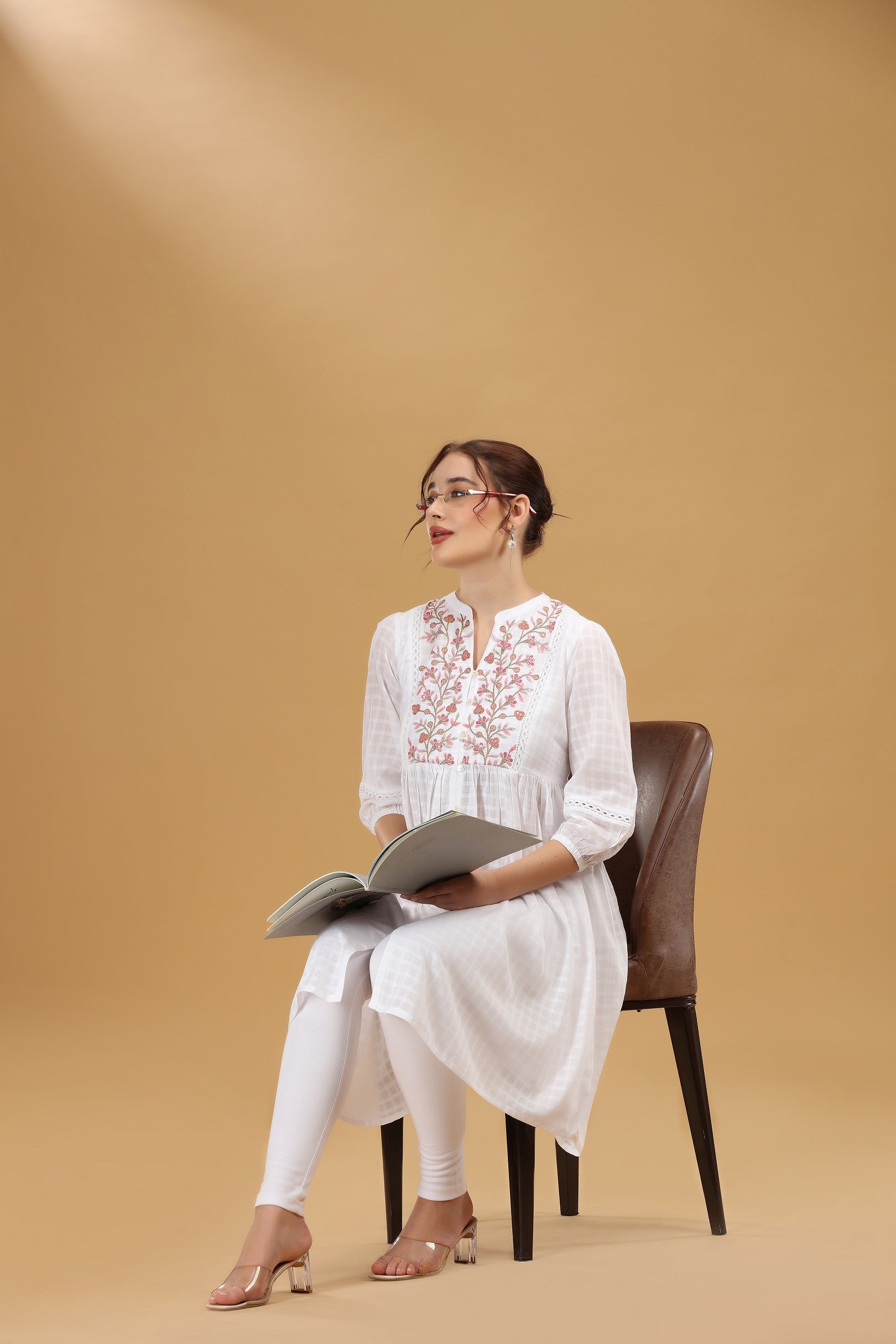
For office wear, pair your white cotton kurti with straight-cut pants and minimalist jewelry. The look reads as polished and professional without trying too hard. Add a colorful dupatta for meetings where you want to project more traditional authority. For festive occasions, the same kurti transforms completely with palazzo pants, statement jhumkas, and a silk dupatta.
We've noticed in our Jaipur and Lucknow stores that women specifically seek out white kurtis before wedding season—not to wear to weddings themselves, but for the endless rounds of pre-wedding functions, shopping trips, and family gatherings where you need to look appropriate without upstaging anyone. White is respectful, elegant, and safe.
Timeless Style & Minimalism
Fashion trends come and go, but white cotton has remained constant since my grandmother's time. While we've seen neon phases, maximal embroidery trends, and digital print explosions come and fade, the plain white cotton short kurti for women never loses relevance. It's the ultimate wardrobe insurance policy.
Minimalism in Indian fashion doesn't mean boring—it means intentional. A well-cut white kurti in quality cotton is a canvas. You can dress it up or down, make it traditional or contemporary, keep it subtle or add bold accessories. The kurti itself doesn't shout for attention; it allows you to control the narrative of your outfit based on the day's requirements.
From a retail perspective, white cotton kurtis have the lowest return rates in our stores. Women know what they're getting. There's no "it looked different in the picture" complaint with white. No color-matching anxiety with existing bottoms. It just works.
Types of White Cotton Short Kurtis
Pure Cotton White Short Kurti for Women
When I say "pure cotton," I mean 100% cotton with no synthetic blending—and yes, you can feel the difference. Hold a pure cotton kurti up to light and notice the slight irregularity in the weave. That's not a defect; it's proof of natural fiber. Synthetic blends look uniform, almost too perfect.
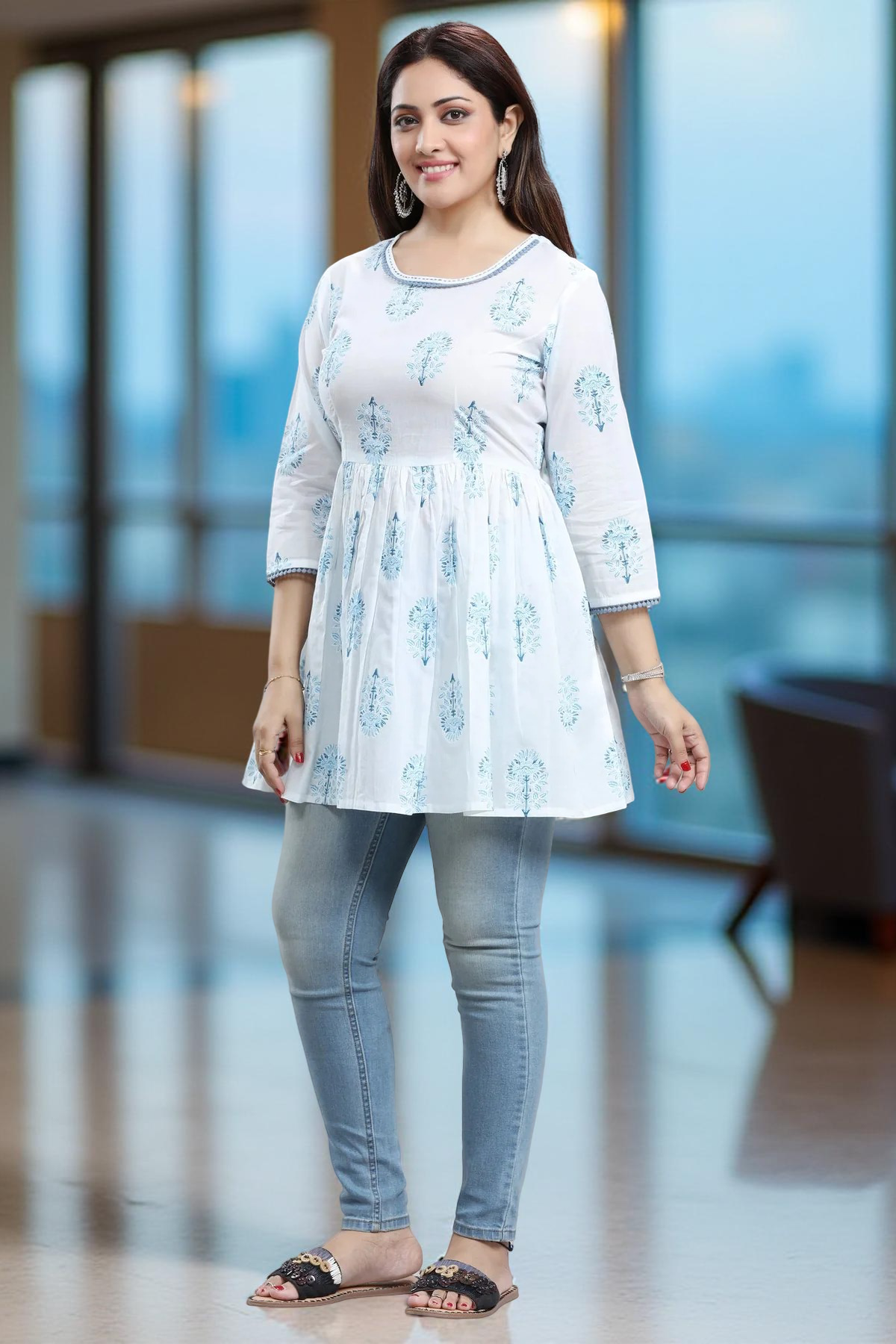
We source our pure cotton from mills in Coimbatore and Ludhiana, and the quality variance between mills is significant. Good pure cotton has a certain weight to it—not heavy, but substantial. It shouldn't feel flimsy or see-through even in white. The weave should be tight enough that you're not worried about sheerness but breathable enough that air circulates freely.
Mulmul cotton is our bestseller for pure white kurtis. It's lightweight, has a soft hand feel, and drapes beautifully without clinging. Customers in Chennai and Kolkata particularly love mulmul for its cooling properties. Cambric cotton is slightly crisper—ideal for women who want a more structured silhouette that holds shape through the workday.
Test fabric quality by doing the crumple test. Scrunch a section of the kurti in your fist for 10 seconds, then release. Good cotton will show wrinkles but bounce back partially. Cheap cotton stays crumpled. Synthetic cotton won't wrinkle much at all.
White Printed Short Kurti for Women
The white printed cotton kurti category has exploded in the past five years, and for good reason—it offers visual interest without overwhelming the senses. Block prints, screen prints, and digital prints each have distinct characteristics.
Block-printed white kurtis from Jaipur and Bagru use natural dyes and traditional wooden blocks. You can identify genuine block printing by slight irregularities in pattern repetition—that's the human hand at work. These prints often feature small motifs in contrasting colors like indigo blue, rust orange, or bottle green against the white base.

Screen printing allows for finer detail and more complex designs. We've seen stunning mandala prints, geometric patterns, and abstract art on screen-printed white kurtis. The key quality indicator here is color fastness. Rub a damp cloth on the printed area before purchasing—if color transfers, it'll bleed in wash.
Digital printing is the newest technology, enabling photographic prints and gradient effects. While purists might scoff, I've seen digital-printed white floral cotton short kurti for women designs that are genuinely beautiful—think watercolor blooms or delicate botanical illustrations. Just ensure the print is on quality cotton, not cheap fabric masquerading as premium because of fancy printing.
White Floral Cotton Short Kurti for Women
Floral prints on white cotton have a special place in Indian summer wardrobes. They're cheerful without being loud, feminine without being frivolous. We stock floral kurtis year-round, but they fly off shelves between March and June.
Small ditsy floral prints work beautifully for petite frames—they don't overwhelm your silhouette. Larger botanical prints make bold statements and suit taller women or those who want the kurti to be the outfit's focal point. Medium-sized floral patterns are the most versatile, working across body types and occasions.
Color combinations matter significantly with florals. White cotton short kurti for women with pink and peach florals read as soft and romantic. Red and orange florals feel festive and energetic. Blue and green florals appear calmer, more suitable for professional settings. Black and grey florals on white create sophisticated contrast—unexpectedly modern for ethnic wear.
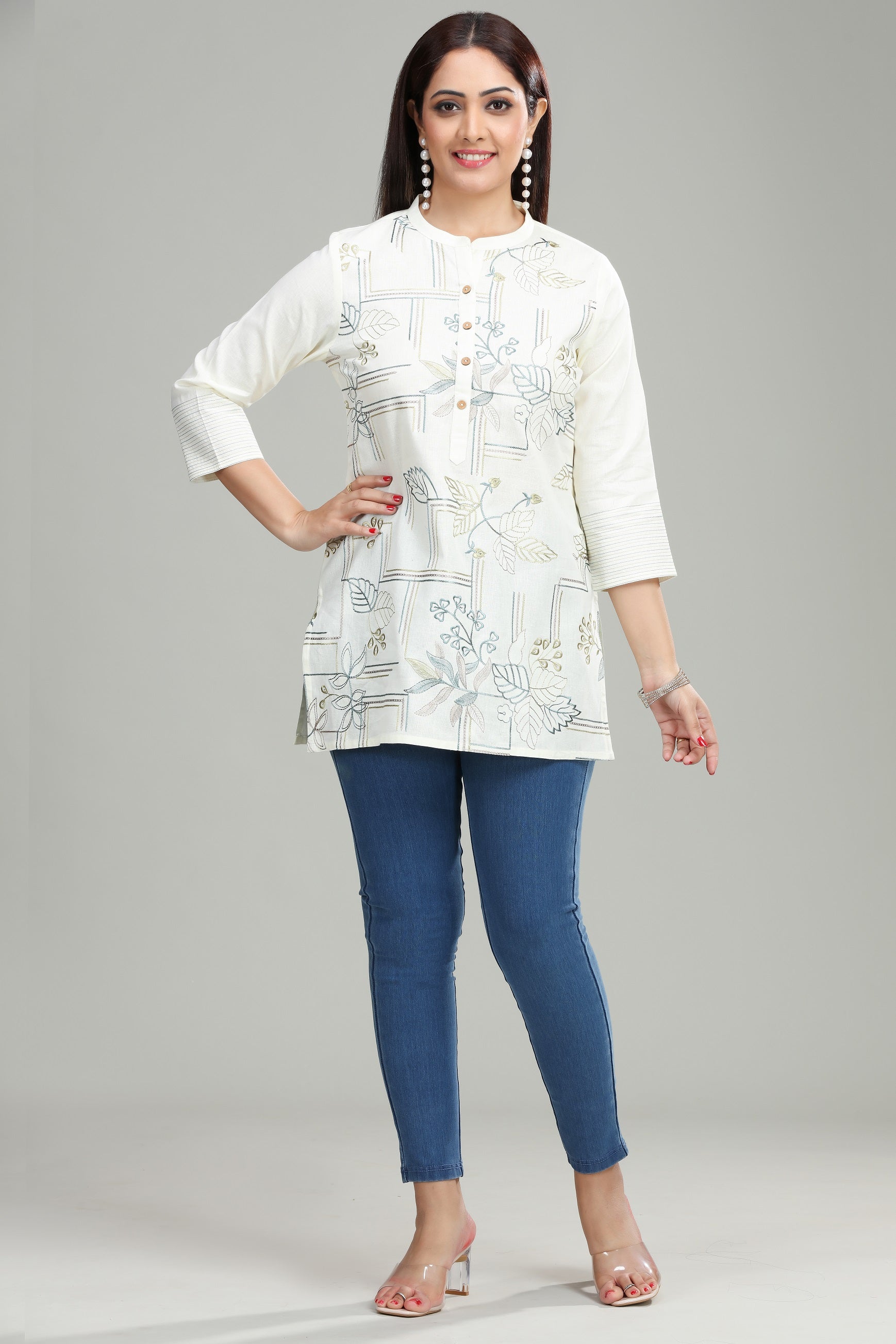
From our retail experience, floral kurtis with embroidered or embellished centers (like gota work on the neckline or dori work at the hemline) sell exceptionally well. The combination of print and handwork adds perceived value without dramatically increasing cost.
Cotton White Short Kurti for Women Sleeveless
The sleeveless kurti for women in white cotton is controversial in some circles but increasingly popular in urban India. I was skeptical about stocking sleeveless options initially—would they sell? The answer surprised me. In metropolitan stores like Mumbai, Bangalore, and Gurgaon, sleeveless white cotton kurtis are summer bestsellers.
Sleeveless kurtis work particularly well for layering. Wear them over fitted full-sleeve inner tops for conservative work environments. Layer under shrugs or jackets for air-conditioned offices. Or wear them as intended during peak summer for maximum breathability.
Design details matter more with sleeveless styles because the armhole cut is fully visible. Look for armholes that are neither too deep (avoid awkward underarm exposure) nor too tight (restrict movement). The best sleeveless kurtis have slight cap details or finished armholes with piping or lace that look intentional rather than like someone just cut off the sleeves.
Pair sleeveless white cotton kurtis with contrast dupattas—the dupatta can cover your arms and shoulders when needed for traditional settings while allowing you to remove it for comfort in casual contexts. This flexibility makes the style extremely practical for women navigating multiple dress code expectations daily.
Off White Cotton Short Kurti for Women
Off-white isn't just "not quite white"—it's a deliberate color choice with distinct advantages. Ecru, ivory, cream, and bone shades fall under this category, each with slightly different undertones.
Pure white can be harsh against certain skin tones, particularly very fair or very deep complexions. Off-white softens the contrast, creating a more flattering overall appearance. It's also more forgiving regarding stains and wear—spilled chai is less catastrophic on cream than stark white.
From a fashion perspective, off-white reads as more relaxed and approachable than bright white. It's the difference between a formal button-down shirt and a comfortable linen top. For older customers or those building mature wardrobes, off-white often feels more age-appropriate than youth-oriented bright white.
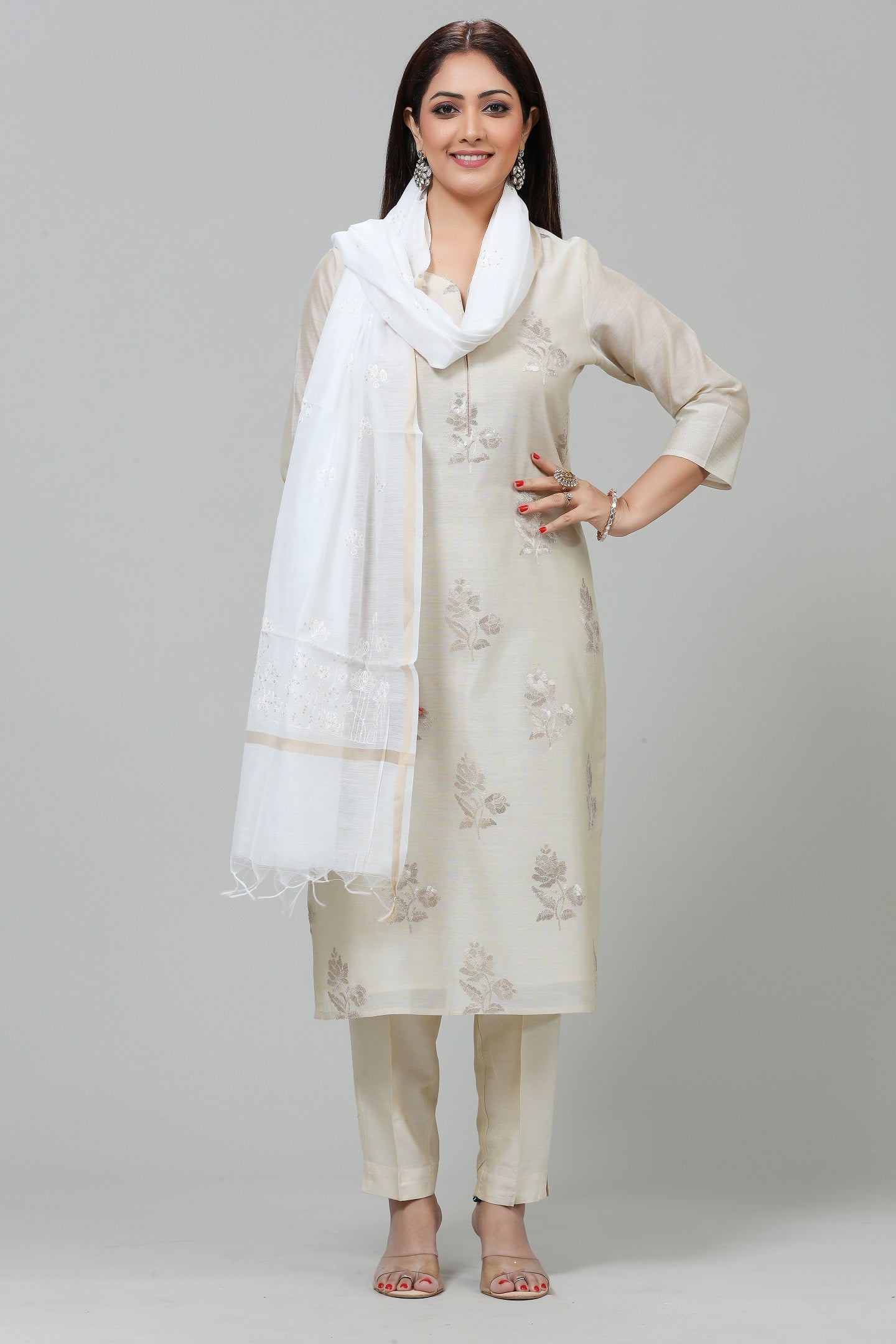
The challenge with off-white is maintaining color consistency across washes. Quality cotton holds its shade; cheaper cotton yellows unevenly. Look for colorfast fabric and follow care instructions religiously. Wash off-white separately from whites to prevent color bleeding that might further alter the shade.
White Cotton Short Kurti for Women with Dupatta
The white cotton short kurti for women with dupatta combination deserves special attention because the dupatta fundamentally changes the outfit's versatility and formality level. A plain white kurti paired with the right dupatta can range from casual-chic to completely traditional.
Cotton dupattas in contrasting colors transform white kurtis instantly. We've seen beautiful combinations—red bandhani dupattas with plain white kurtis for festive occasions, indigo block-printed dupattas for contemporary looks, pastel embroidered dupattas for weddings and parties. The kurti remains constant; the dupatta does the heavy lifting.
Our Dupatta Collection: https://www.cottonculture.co.in/collections/dupatta
Chiffon or georgette dupattas add formal elegance to cotton kurtis. The fabric contrast itself—matte cotton against flowing chiffon—creates visual interest. Net dupattas with gota work or lace borders are particularly popular for sangeet functions and pre-wedding events.
When buying kurti-dupatta sets, ensure the dupatta isn't an afterthought. Check for coordinated colors rather than exact matches—coordinated creates intentional style while exact matching can look costume-like. The dupatta should be at least 2.25 meters long for proper draping and styling options.
Conclusion
The white cotton short kurti for women isn't just another wardrobe piece—it's a problem-solver, style chameleon, and reliable companion for Indian women navigating diverse fashion contexts daily. From my 22 years watching women's fashion evolve across 51 Cotton Culture stores, this single garment has proven its staying power and versatility time and again.
What makes it indispensable is precisely its simplicity. White doesn't compete; it complements. Cotton doesn't constrict; it breathes. Short length doesn't limit; it liberates. Together, these elements create a garment that adapts to your life rather than demanding you adapt to it.
Whether you're building your first ethnic wardrobe, refreshing your work outfits, or seeking that perfect casual-yet-put-together look for everyday life, a quality white cotton kurti delivers. It's the ultimate canvas for your personality—subtle when you need it to be, striking when you want it to be, and always comfortable regardless.
Investment in quality pays dividends. That ₹2000 kurti in perfect mulmul cotton will serve you for years. That ₹600 synthetic blend will disappoint within months. Choose wisely, care properly, and your white cotton kurti becomes a wardrobe foundation rather than seasonal disposal.
Fashion trends will cycle through—we've seen them come and go. But the white cotton kurti remains constant, adapting its details while maintaining its essential character. That's not limitation; that's timeless design.
Ready to find your perfect summer staple? Explore our latest collection of premium, handcrafted white cotton kurtis at Cotton Culture —where tradition meets everyday comfort. Visit us online at www.cottonculture.in or drop by any of our 51 stores across India. Your ideal white kurti is waiting.
About the Author:
Khushnuma Qazi is a fashion entrepreneur and Co-Founder of Cotton Culture, a homegrown Indian women's apparel brand with 51 self-managed stores across India. With over 22 years of experience in apparel manufacturing, design, and retail expansion, she writes on Indian fashion trends, cotton-first apparel, sustainable practices, and consumer-centric retail strategies. Her insights are grounded in real-world retail experience and evolving customer preferences.
Connect on LinkedIn


